
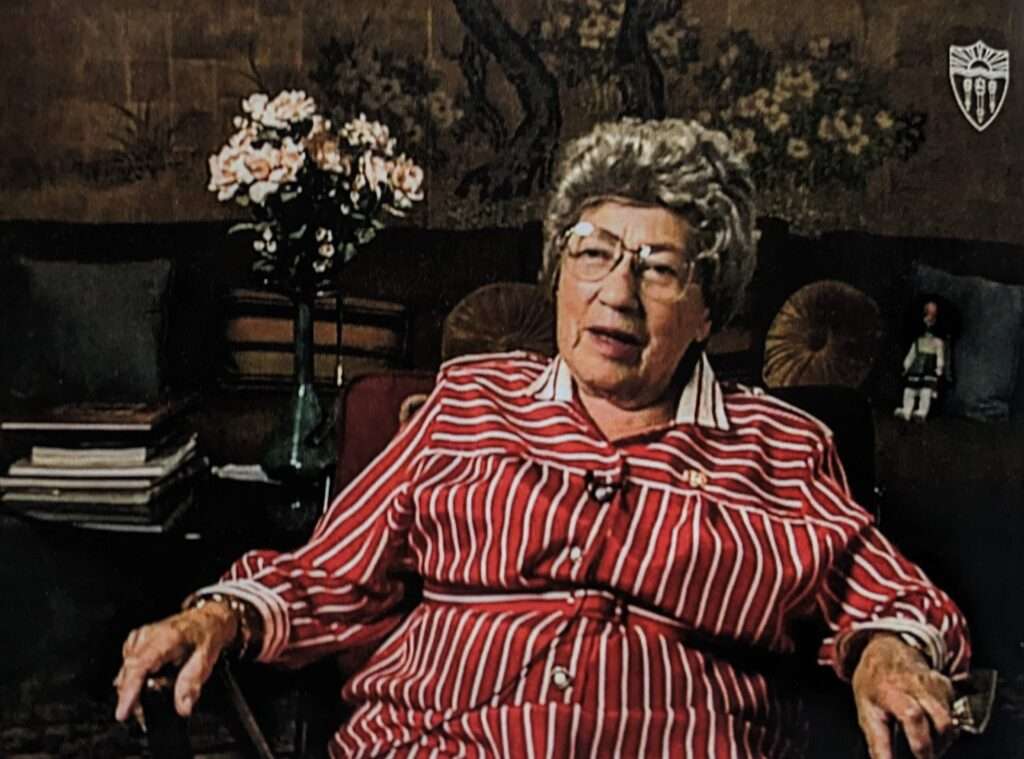
Irma Simon – verheiratete Haas, verwitwete Rothschild – wurde am 9. Oktober 1907 in Londorf, heute ein Ortsteil der Kommune Rabenau in Oberhessen, geboren. Ihr Vater war der Metzgermeister Isaak Simon, geboren am 17. August 1871 in Londorf. Bereits Irmas Großvater Anselm Simon und ihr Urgroßvater Seligman Simon hatten in Londorf koschere Metzgereien betrieben. Irmas Mutter Johanna, geborene Joseph, war am 30. August 1882 im benachbarten Allendorf an der Lumda zur Welt gekommen. Moses Joseph, Irmas Großvater mütterlicherseits, war Branntweinhändler und Gastwirt in Allendorf; Irmas Großmutter Karolina, geborene Weinberg, stammte aus einer Allendorfer Kaufmannsfamilie.
Irma Simon war das dritte von vier Kindern, die alle in Londorf das Licht der Welt erblickten: Siegfried, geboren am 31. August 1904, Julius, geboren am 14. Dezember 1905 und Brunhilde, genannt Hilde, geboren am 30. September 1910. Die Simons lebten zusammen mit Isaaks Eltern Anselm Simon und Jette, geb. Löwenstein – sie stammte aus Kraftsolms – in der Kirchgasse 2.
In einem Interview für die Shoah Foundation im Jahr 1997 erzählt Irma – sie war zu diesem Zeitpunkt 89 Jahre alt und trug den Nachnamen ihres zweiten Ehemannes, Haas – von ihrer Kindheit in Londorf: „When I was a child, there lived about twenty, twenty-two Jewish families there. In small places in Germany, they were all Orthodox. They did not work on Shabbos. There was a synagogue, there was a mikvah, and we had a Hebrew teacher. But we had no Jewish school.“1
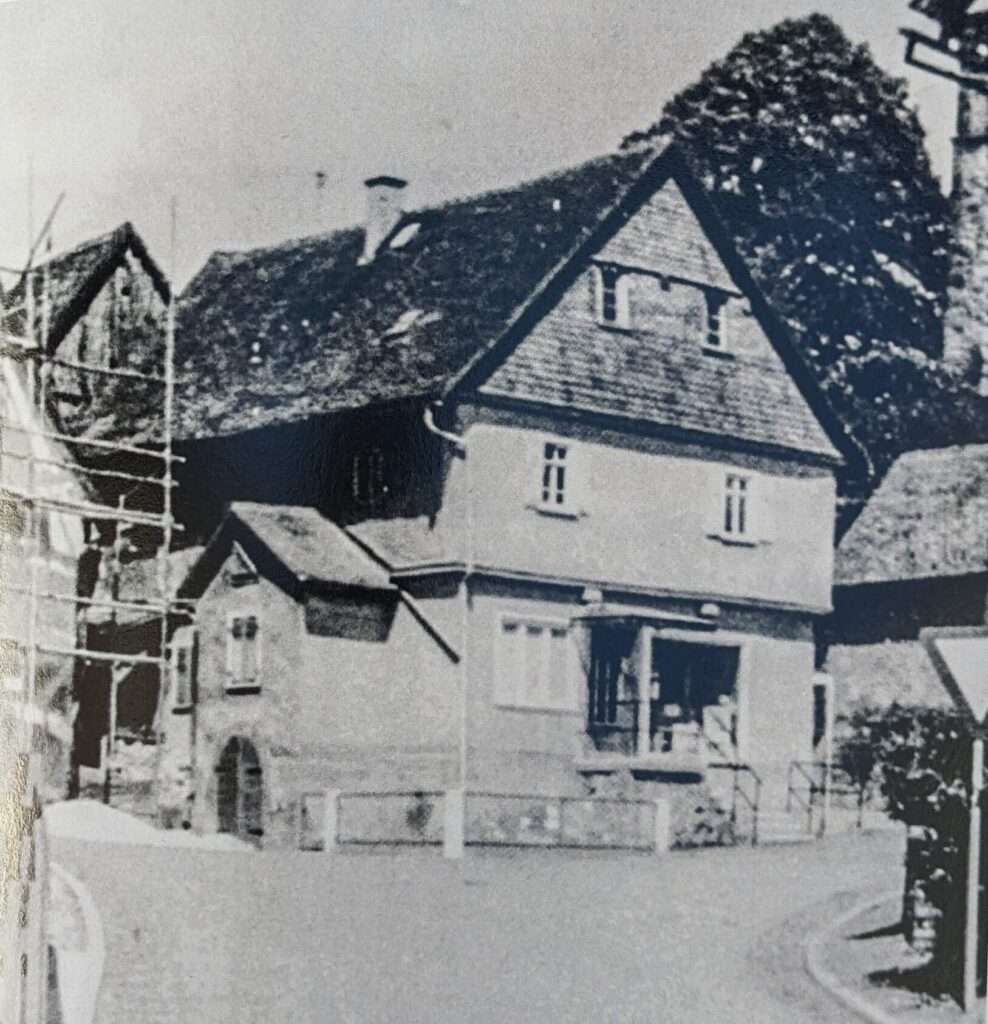
Im Jahr von Irmas Geburt hatte ihr Vater Isaak Simon in Gießen die Schächterprüfung abgelegt. Er diente als Soldat im Ersten Weltkrieg. Nach seiner Heimkehr verschob sich der Schwerpunkt seiner beruflichen Arbeit. Irma Haas: „My father had togther with his brother Abraham a butcher store. But our father mainly worked for an insurance company. […] Animal insurances. All the butchers and farmers insured their animals. And that’s where he traveled around and made insurances.“2
Im Aufsatz über das jüdische Leben in der Rabenau von Artur Rothmann heißt es über Irmas Vater: „Isaak Simon war als zweiter Bass aktiver Sänger im Gesanverein ‚Frohsinn‘. Zum Bundesfest des Lahntal-sängerbundes 1926 war er im Presseausschuss. Im gleichen Jahr wurde er Ehrenmitglied im Gesangsverein.“3 – Isaak Simon war auch theologisch gebildet, wie Irma Haas zu berichten weiß: „He studied as a young boy after school in a Hebrew seminary [in Giessen?]. And he was a wonderful hazzan. And he read the Torah every Shabbos in our synagogue.“4
Vom Großvater Anselm Simon, der 1893 Vorsteher der Jüdischen Gemeinde gewesen war, erzählt sie: „Our grandfather was, as long as we children knew him, always in bed. He had rheumatic fever. He couldn’t be up. And they had a grocery store, but he couldn’t do it anymore.“5 Die Frage der Interviewerin, ob die Großeltern auch orthodox gewesen seien, bejaht sie und erklärt: „Jewish people in the country in Germany didn’t know anything about Conservative or Reform. It did not exist.“6 – Irmas Großeltern väterlicherseits starben kurz nacheinander in Londorf: Anselm Simon am 15. Dezember 1918 und Jette, geb. Löwenstein, am 9. September 1920. Ihre Grabsteine sind auf dem Jüdischen Friedhof in Londorf in Reihe 9, Nr. 10 und Nr. 14, erhalten.
Der Familienzusammenhalt der Simons war stark. Irma Haas: „Our mother was a wonderful person. She lived only for the family. We were four children, two older brothers, and then I, and then my younger sister, Hilde, who … We were very close, as children, and as grown-ups too.“7 – Artur Rothmann schreibt: „Die Familie [Simon] hatte ein Dienstmädchen, das mit der Mutter einer Zeitzeugin befreundet war und mit dieser zum gleichen Spinnstuben-Jahrgang gehörte.“8
Irma Haas erinnert sich im Interview gerne an die Kinderzeit in Londorf. Gefragt, womit sie sich am liebsten beschäftigte, antwortet sie: „Plays, like all the children. I read a lot. I was well-known … When I did my homework … We had a special room upstairs for the children to do the homework. And when my mother called me and said: ‚Are you not yet finished?,‘ I said: ‚Yeah, soon.‘ Because I had always a book under the table, where I read. They called me a bookworm, since that was my biggest pleasure. But we also played outside. We had a garden, and we had a lot of friends. […] Jewish and others.“9
Irma Simon war ein aufgewecktes Kind. Über ihre Schulzeit erzählt sie: „We went the first three years to the public school and then to the high school in a city about three quarters of an hour train ride. The name was Grünberg.“10 – An späterer Stelle im Interview erklärt sie: „There was no Jewish school. The next one was in Frankfurt am Main and that was impossible. It would have been about three hours to travel one way.“11
Eingeschult wurde Irma Simon in die Grünberger Realschule an Ostern 1918, also im Alter von zehn Jahren, in die Quinta (heute 6. Klasse). Auch ihre älteren Brüder waren an der Schule: Siegfried, eingeschult an Ostern 1913, war 1918/19 in Untersekunda (heute 10. Klasse); Julius, der an Ostern 1916 in Sexta eingetreten war, besuchte die Quarta (heute 7. Klasse). Beide Brüder machten die „Einjährig-Freiwilligen-Prüfung“, auch „Obersekundareife“ genannt, ein Pendant zur heutigen Mittleren Reife: Siegfried an Ostern 1919 und Julius an Ostern 1922.
In Irmas Klasse waren weitere jüdische Kinder: Manfred Jonas und Alfred Joseph, beide aus Londorf, sowie Hermann Eckstein aus Kesselbach. Während diese drei Schüler an Ostern 1923 die Mittlere Reife machten – sie sind abgebildet auf dem Klassenfoto, das traditionell vor dem Gebäude der Realschule aufgenommen wurde –, verließ Irma Simon die Schule bereits an Ostern 1922 aus Obertertia (9. Klasse).

Irma Simon sollte eine Stellung als Haushälterin antreten, wie aus einem von ihrem Vater aufgesetzten Inserat in der Zeitung „Der Israelit“ vom 5. Juni 1924 hervorgeht: „Suche für meine 16-jährige Tochter, die in allen häuslichen Arbeiten gut angelernt ist und Sekundareife hat, Stelle zur Erlernung des Haushalts in nur gutem Hause (rit.) bei Familienanschluss ohne gegenseitige Vergütung. Isaak Simon, Londorf (Oberhessen).“12
Zwar erlebte Irma Simon vor der Machtübernahme der Nazis persönlich keinen Antisemitismus; sie wusste aber, dass Hessen als Hotspot der antisemitischen Bewegung galt: „Our father told us that in around 1900, there was a big movement of antisemites in Hessen, and they followed Jews and beat them up. […] Hessen was always known for antisemitism.“13
Worauf Isaak Simon wahrscheinlich anspielte: In den 1880er Jahren hatte der Marburger Bibliothekar Dr. Otto Böckel – der „hessische Bauernkönig“ – auf den Dörfern gegen die jüdischen Viehhändler gehetzt. Seine ‚Bekehrung‘ zum fanatischen Antisemiten, zum ‚Befreier‘ der hessischen Bauern von der ‚Judenherrschaft‘, hatte Böckel, der später als Abgeordneter der Antisemiten-Partei im Reichstag agitierte, angeblich bei einem Gerichtstermin in Marburg erlebt: Trotz erdrückender Indizien war dort Konrad Hedderich, der mutmaßliche Mörder des jüdischen Ehepaares Salomon und Johanna Wolf aus dem benachbarten Nordeck, aus angeblichem Mangel an Beweisen freigesprochen worden und anschließend von der antisemitischen Marburger Studentenschaft als Märtyrer gefeiert worden. Nach 1890 hatte die Antisemitenbewegung in Hessen ihren Zenit überschritten, aber antijüdische Stimmungen schwelten weiter und konnten jederzeit hochkochen.14
Als die Nazis an die Macht kamen, setzte sogleich die Entfremdung zwischen jüdischer und nichtjüdischer Bevölkerung ein – auch wenn es sich um beste Freundinnen handelte: „I had one girl with whom I went through the whole high school, non-Jewish, and the day Hitler came, she didn’t greet me anymore on the street. I met her some weeks later in the post office, and there was nobody, and she came to talk to me. I said: ‚Hanna,15 you don’t greet me anymore, you don’t talk to me. What do you want to talk now?‘ She said: ‚Oh, I am the same to you, but I may not. Because if they see me, then they call me a friend of the Jews and that. […] Her father was some professional. And they were afraid.“16
Durch die Boykott-Aktion am 1. April 1933, die sich in Londorf heftig auswirkte, wurde Irmas Schwester Hilde aus der Heimat vertrieben: „In 1933, at the end of January,17 there was a boycott of all Jewish businesses. And in the night, they threw rocks through the windows. We had a big house. My sister was home. I wasn’t home. And she got so scared that my parents decided to send her abroad. And she went in September ’33 to Holland through France. She went to a family to take care of their children. And she never … Only for a visit … But she never came back […].“18
Dann kamen die rassistischen Nürnberger Gesetze. Irma Haas: „We couldn’t have … Our father couldn’t have his business anymore, we couldn’t have our maid anymore, no non-Jewish. So that’s when it started. And it got worse. They arrested people, in fact, it went on and on …“19
Irma Simon lebte zu dieser Zeit bereits nicht mehr in Londorf, kam höchstens an Wochenenden nach Hause: „I went to school, and to seminary. I wanted to study languages, but then college was impossible. So, I became a kindergarten teacher. […] I went to an orphanage near Cologne. I worked there for one and a half year. […] That was in 1927. But there was already a lot of antisemitism.“20
Von Köln ging es nach Frankfurt, wo Irma Simon die kleinen Kinder einer Familie betreute. Danach wechselte sie als Kindergärtnerin an das jüdische Landschul- und Kinderheim Caputh bei Potsdam:21 „I was there first in 1935 in a home. It was originally a vacation colony. But then it became a children’s home with about 150 children, near Berlin, near Potsdam. And I stayed there maybe a year. And then came the Nürnberger [Gesetze], where they forbade the kosher slaughtering, the shechita, and they could only use meat from animals that got injections first. And that was not kosher for us. So I couldn’t stay there [in Caputh].“22
So zog Irma Simon weiter nach Berlin: „It was about an hour away, where I had a brother [Julius?], and there I called a cousin who was the director of an orphanage. And I said: ‚Do you know anything for me here?,‘ and he said: ‚O yes, I know the director of the kindergarten and afternoon groups at Adass Jeshurun [Jisroel].23 […] He goes on Aliyah, and they are looking for somebody. I call them up and I make an appointment for you.‘ And that’s where I started on that school in Berlin.“24
Dann kam der Novemberpogrom 1938, und die Adass Jisroel-Schule musste schließen. Irma Haas erinnert sich: „I didn’t know anything. I had a room with a cousin of my first husband [Erwin Rothschild]. And that were very close friends of ours. And in the morning, I went to school, it was about a seven, eight minutes‘ walk. I had no idea what happened. And when I came to school, I went first to conference room, where all the teachers came together in the morning to talk about programs, and so. So they say to me: ‚Don’t you know what happened last night?‘ I said: ‚No, what happened?‘ – ‚They burned all the synagogues down and the schools. I don’t think that we will have school today.'“25
Irmas älterer Bruder Siegfried Simon lebte zu dieser Zeit in Stettin: „That was about two hours from Berlin. He was a salesman for a big men’s confection factory. And the evening before [the Reichspogromnacht], he came back from a trip to France. He was there on a business trip. And I met him in Berlin. And I said to him: ‚Stay overnight.‘ He said: ‚I can’t. I have to bring my orders in. I have to be there tomorrow morning.‘ So he left. We were about an hour together, and he left. And I went home. […] After I came back from the school, I got a call from Stettin, from friends of his. And they told me that he was arrested and sent to the concentration camp Sachsenhausen, that was near Berlin.“26
Es begann eine dramatische Rettungsaktion. Irma Simon wurde von Siegfrieds Stettiner Freunden gebeten, den Bekannten aufzusuchen, der ihm ein Visum für Kuba verkauft hatte: „I went there right away. And there I passed the big synagogue in the West of Berlin, that is today rebuilt, the only synagogue, I think, in Berlin [Neue Synagoge Oranienburger Straße27]. And I saw it in flames. And I went […] above, and I saw it from the window. When I came there, there were big lines of people. Next to it was the office of the Palestine immigration office.“28
Der Bekannte bestätigte, dass Irmas Bruder Siegfried in Sachsenhausen inhaftiert worden war. Allerdings könne er nichts für ihn tun, denn nach ihm selbst werde auch gesucht, weshalb er in den Untergrund gehen wolle.
Irma Simon hatte eine andere Idee, wie sie ihrem Bruder helfen könnte: „I called my sister [Hilde] in Holland. She and her fiancé [Simon Eisenmann] got a visa for Brazil … For Bolivia first. […] For our brother. And I went with that visa to Stettin to the Gestapo, which was located in the same house where the Jewish congregation was. And they told me: ‚Don’t go up. You won’t come back.‘ And I said: ‚I have to go up.‘ And I went up, and I was called in, and there was the Gestapo man sitting, and he said: ‚What do you want?‘ Of course in German. And I told him. He said: ‚What’s the name of your brother?‘ I told him too. So he opened the drawers. There were lots of passports in. Our brother had come back from France, he had his passport still on him. So he pulled the passport out. He said: ‚That’s your brother?‘ I said: ‚Yes.‘ He said: ‚Let me see the visa.‘ I showed him the visa. And he said: ‚Go home, in a week your brother will be home.‘ I said: ‚Is that sure?‘ He said: If I tell you so, it’s sure.‘ So downstairs I left. They said: ‚Don’t believe him.‘ After one week our brother was back.“29
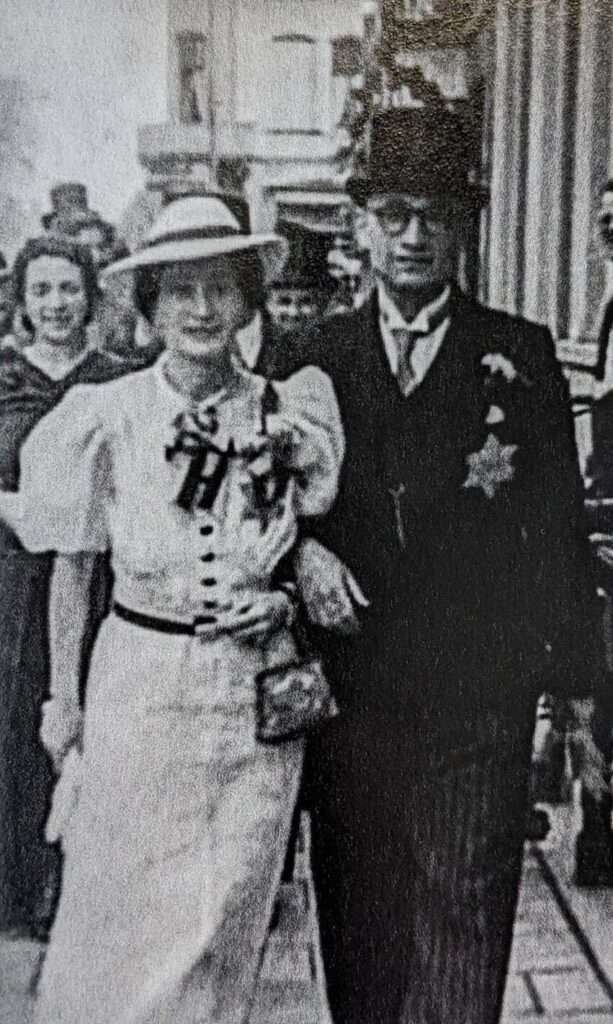
In der Zwischenzeit hatten Irmas Schwester und ihr Verlobter Simon Eisenmann ein Visum nach Brasilien organisieren können. Simon Eisenmann fuhr nach Stettin und dann mit Siegfried Simon weiter nach Frankreich, weil sein Schiff in Marseille ablegen sollte. Die Geschwister verbrachten ein paar Wochen zusammen in Paris, bevor Siegfried Simon im Februar 1939 nach Brasilien emigrierte. „That’s how he was saved“,30 schließt Irma Simon diesen Erzählstrang.
Der zweitälteste Bruder Julius Simon war bereits im September 1938 in die Vereinigten Staaten emigriert. Auch für seine Rettung hatte Irma Simon sich eingesetzt: „I had been here [in the US] 1937 on my vacation trip to get the papers for my brother. Because […] a sister of our grandmother had sent the papers. But on the consulate, they said, she is too old. So … Her sons didn’t speak German. I went here [to the US], and I got affidavits from the sons, and our brother got out.“31
Auch die Eltern Johanna und Isaak Simon versuchten der nationalsozialistischen Verfolgung zu entkommen. Ihre späte Auswanderung führt Artur Rothmann darauf zurück, dass Isaak Simon „sich wahrscheinlich der jüdischen Gemeinde verpflichtet fühlte.“32 Noch bis 1938 versah er den Vorbeterdienst in der Synagoge und gab Religionsunterricht. Und dies, obwohl er in Londorf Demütigungen und Gewalt erlebte: „Eine Zeitzeugin berichtete, dass ihm in Londorf bei einem der SA-Überfälle mit der ‚Kloppbeutsch‘ auf den Kopf geschlagen wurde. Eine andere Zeitzeugin erzählte, dadss beim Sturm seiner Wohnung im November 1938 die SA-Leute auch die Bilder auf die Straße warfen, wo sich die Juden hatten aufstellen müssen. Isaak fiel dabei ein Bild auf den Kopf, das zerbrach, und er hatte den Rahmen um den Hals hängen.“33
Ihre Auswanderung wurde durch ihr hohes Alter erschwert, aber Irmas Schwester Hilde ließ nicht locker: „For older people, it was very hard to leave. And our sister [Hilde] got married, a civil marriage, not the Jewish marriage. Because she wanted to go back and forth. That’s what she did to get our parents and grandmother out. And she got them out. They left in May [’39]34 and went to Holland. She had already an apartment rented for them. And they were very happy there.“35
Kurz danach, im Mai 1939, verließ Irma Simon Berlin Richtung Holland, um auf dem US-amerikanischen Konsulat in Rotterdam auf ihr Visum in die Vereinigten Staaten zu warten. Ihr Verlobter Erwin Rothschild hatte ein Visum nach Kuba und wollte von dort aus die USA erreichen. Daraus sollte nichts werden: „My fiancé had left a week before on the St. Louis to Cuba. And when I came to Holland, and I got the newspaper, I read that the St. Louis could not land in Cuba and that it was on the American shore near Miami.36 But they didn’t let it in. So the captain – this was a German boat – […] was a very decent man. And when the United States refused landing, he cabled the HIAS [Hebrew Immigrant Aid Society] in London. And England, Holland, Belgium, and France consented to take each 200 people in. And the captain calls the people on bord – that was after they were there two weeks – and asked them if they had any preference for a country, so my fiancé said: ‚Of course, Holland.‘ That’s how we got to Holland.“37
In Den Haag, Holland, vermittelte ihr Schwager Irma Simon eine Stelle als Co-Leiterin eines Heimes für jüdische Flüchtlingskinder: „They were about 150 children, refugee children from Germany and Austria, whose parents were either deported or whose parents were already in Palestine or the United States and were waiting for their children. We had two big houses, they were donated to the government by a Jewish man who went to South America. And he gave the houses to the Dutch government for refugee children. And it was very well organized. And we got the kosher food from the Jewish kitchen of the hospital every day delivered.“38
Und dann kam der Überfall NS-Deutschlands auf die Niederlande: „[On] the 10th of May, 1940, when Germany invaded Holland, when Holland capitulated after five days, on the morning […]. I had only one Jewish girl [at the children’s home in The Hague]. The whole staff was non-Jewish. And they all ran away. They were afraid to be found with Jewish children. So, one non-Jewish man, our sport teacher, stayed. And he said: ‚Don’t worry, I don’t leave you.‘ A frew hours later the Germans came. They inspected the houses. They were beautiful houses. And the said: ‚Till tonight, 11 o’clock, you have to be out of here with all the children, with all your stuff.'“39
Irma Simon versuchte verzweifelt, für die ihr anvertrauten Kinder ein Obdach zu finden: „So I called the Dutch government. There was one man who was taking care of us. And I told him: ‚What shall I do?‘ He said: ‚I call you back.‘ He called me back an hour later and he said: ‚I send a few trucks. You have to load all the children and all their belongings on it. And there is a big estate outside of the city. And there we will bring you.‘ So we were brought there, by evening. The children […] we put on straw. We had no beds. And an hour later, we got a call that we could [only] there till Monday. We had to bring the children into the Jewish houses in The Hague.“40
Irma Simon gab nicht auf: „So I called the chief rabbi. It was Friday night. […] Well, we don’t telephone [on Erev Shabbat]. I told him: ‚What to do?‘ He said: ‚I send right away a list out of all the congregants, and you have to stay on the phone all night and call the people and ask them to take children. Even if it’s Shabbat, you have to do it.‘ So, I stayed all night on the telephone, and we placed about 130 children, the younger ones.“41
Die zwanzig Teenager des Heims konnten zunächst nicht untergebracht werden. Aber die jüdische Gemeinschaft ließ sie nicht im Stich: „So I was called then Sunday morning from the rabbinate, that we should bring the children to Amsterdam, to the Jewish boys‘ and girls‘ orphanage. And that’s what we did, and that was the end of the home [in The Hague]. Very few children survived. A few I met after the war. They came to me in Amsterdam. But most of them were deported.“42
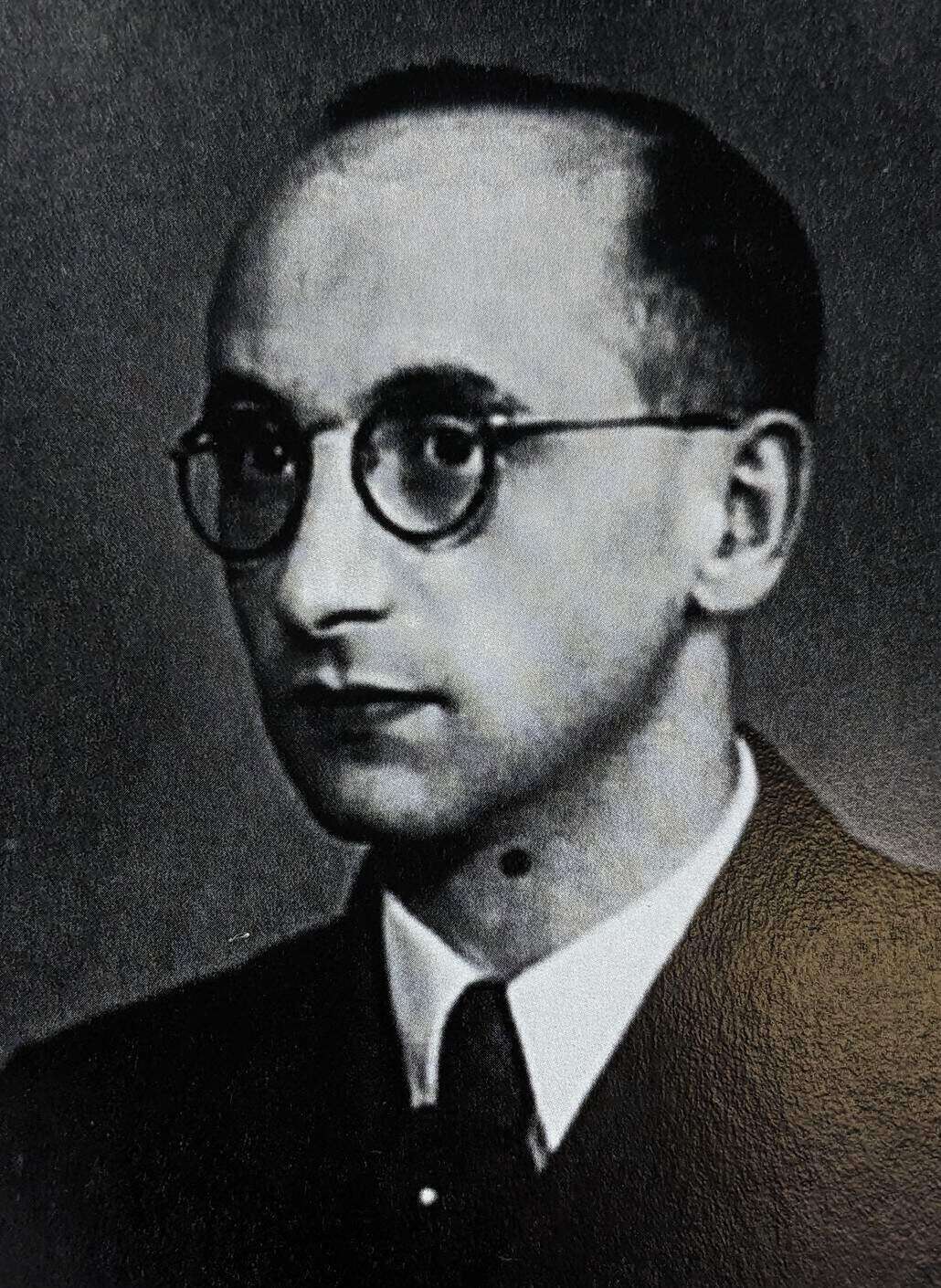
Nachdem das Kinderheim sich aufgelöst hatte, ging Irma Simon zurück zu ihren Eltern nach Amsterdam. Ihr Verlobter Erwin Rothschild war – nach einem Zwischenaufenthalt in einem Hotel in Amsterdam – in Westerbork, einem Ort an der holländisch-deutschen Grenze, untergebracht worden. Dort sollte er mit vierundzwanzig anderen Internierten unter holländischere Militär-Administration ein Lager für gestrandete Flüchtlinge aufbauen. Ihnen wurde versprochen, dass sie nach Erledigung des Auftrags frei sein und eine Arbeitsgenehmigung für Holland bekommen würden.
Nach der Invasion machte sich Irma Simon große Sorgen um die Internierten: „We couldn’t get in touch with them, until we called the chief rabbi of the next city there. […] When the invasion came, he [the chief rabbi] took the whole camp, a few hundred people, to his city, and placed them in Jewish and non-Jewish houses. He didn’t want the Germans when they came in to find these people in the camp.“43
Nach einer gewissen Zeit kehrten die Männer in das Lager Westerbork zurück, das bald von den deutschen Besatzern übernommen wurde. Weil Irmas Ehemann Erwin Rothschild – die beiden hatten 1942 in Amsterdam geheiratet – der einzige Zahnarzt im Lager war, ließen sie ihn nicht gehen. Irma Simon, jetzt Rothschild, wollte zu ihm ins Lager ziehen. Aber ihr Mann bat sie, bei ihren Eltern in Amsterdam zu bleiben, wo sie mehr ausrichten könne.
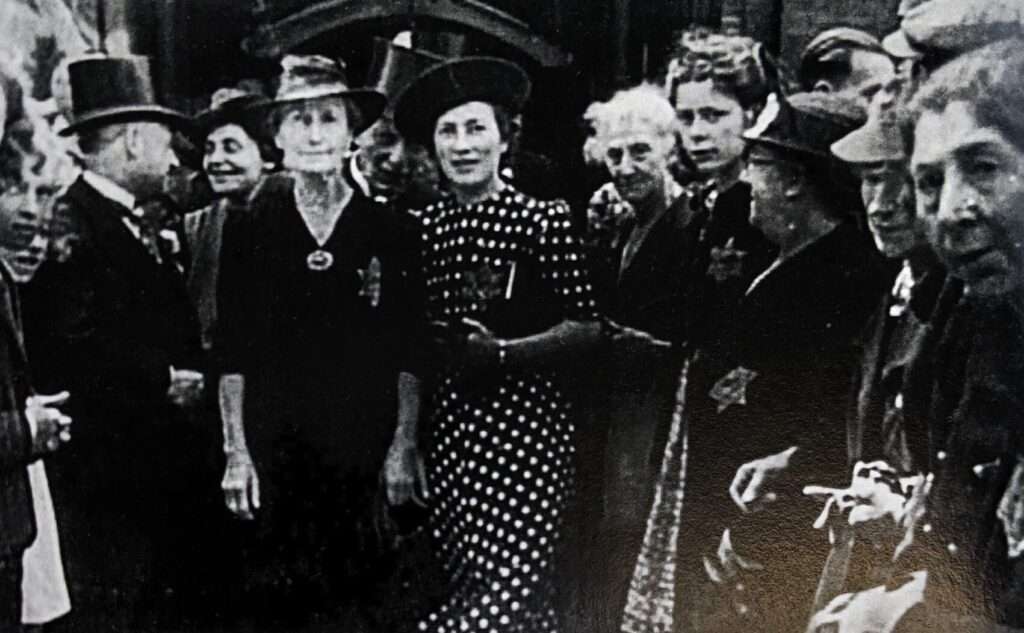
„By the end of ’42“, erinnert sich Irma Haas, „they started to arrest people. And they came to our house and took our parents away. They had lists of the people whom they wanted. And they were brought to Westerbork. I called my husband right away, so that he would be there to do for them what he could do, so they wouldn’t be sent away to the east. We didn’t know anything about Auschwitz, or Birkenau and all these names.“44
Bereits im Februar 1941 hatten Irma und ihre Angehörigen jedoch eine Ahnung bekommen, was es mit dem „Osten“ auf sich hatte: „There was one big razzia in Amsterdam [February 22 and 23, 1941], where they arrested people. You know, Amsterdam is surrounded by Grachten, by water, and they closed all the bridges, and they arrested people and sent them to Mauthausen. […] One friend of ours, the son of one friend, came back. The others all did not come back. There we found out what in the east was going on.“45
Wenige Zeit später hatten die deutschen Besatzer mit Straßenrazzien begonnen: „[…] On any street corner, they collected people with the Jewish star, which we had to wear, and brought them to a place – it was called the Schouwburg theater.46 And there, they collected them. And the next morning, they were brought to Westerbork, or to another camp: Vught, which was really already a KZ, a concentration camp.“47
Westerbork war zu dieser Zeit noch kein Konzentrationslager. Irmas Ehemann hielt es daher für das Beste, wenn sie nach Westerbork käme, damit sie nicht bei einer Razzia aufgegriffen und „in den Osten“ geschickt würde. Sie erinnert sich: „I had to go to Gestapo and get a permit to go on the train. And [in May 1943] I went voluntarily to Westerbork. […] My parents were already there, they were in a barrack. My husband had a little house […] with another couple. Each had a bedroom. We had a little kitchen. But we didn’t cook, we got the food from the big kitchen, from the camp kitchen. And a toilet. So that was not too bad. And I right away started as assistant to my husband, which I never had learned. But I learned quick.“48
Im Lager Westerbork wurde das religiöse Leben von den jüdischen Insassen so gut wie möglich aufrechterhalten. Irma Haas: „There was a German rabbi, and a teacher. The children got Hebrew lessons. And there was, on Shabbat morning, a service. Not during the week, only on Shabbat morning. And the food was kosher through the rabbi in the neighborhood who took care of it.“49
Die Zustände im Lager verschlimmerten sich allerdings mit der Zeit: „In the beginning, there were in the barracks maybe 200 people. But later, there were 400 and 500 peopole pressed in the barracks. And food was also not so plentiful anymore. So it got worse.“50
Im September 1943 erstellten die deutschen Besatzer Listen mit jüdischen Männnern, die im Ersten Weltkrieg gedient hatten, und ihren Angehörigen. Sie sollten von Westerbork nach Theresienstadt geschickt werden. Auch Irmas Eltern Isaak und Johanna Simon standen auf einer solchen Liste. Mit einem regulären Zug wurden sie – vermeintlich, wie sich später herausstellen sollte – nach Theresienstadt transportiert.
Wenig später wurden Irmas Schwester Hilde und ihr Ehemann Simon Eisenmann aufgegriffen und nach Westerbork gebracht. Irma Haas erinnert sich: „My sister was heartbroken, that my parents weren’t there anymore. But we couldn’t do anything. We wrote them to Theresienstadt. We sent packages through friends in Amsterdam […].“51
Diese Päckchen sollten ihre Adressaten nie erreichen. Was Irma und ihre Schwester Hilde erst später erfahren sollten: Auf dem Weg nach Theresienstadt bekamen die Verantwortlichen des Transportzuges die Nachricht, dass das Ghetto überfüllt sei und dass der Transport stattdessen nach Bergen-Belsen gehen sollte. Irma Haas: „We had no idea that they ever had been there [in Bergen-Belsen].“52
Die Rothschilds und die Eisenmanns hatten Papiere für die Einreise nach Palästina, die Verwandte in England und Palästina besorgt hatten. Wer ein solches Zertifikat besaß, wurde von den Deportationen ausgenommen. Irma Haas: „Every Tuesday morning, when the transport of 1010 people to the east … and the commandant, Gemmeker,53 stood at the train and watched it. And the people were heartbroken. And he stood there with a grin.54 I see him still standing there, because our little house was just opposite of the railroad trains. As if […] he sent the people to a vacation.“55
Bald waren auch Irmas Schwester und Schwager an der Reihe. Irma Haas: „One night […] an ordonance came to us and said: ‚You should come right away to the barrack of your sister and brother-in-law.‘ So we went there, and there they were sitting, my sister, overflowing of tears, with their backpacks packed. I said: ‚What’s the matter?‘ She showed me the paper: ‚We are on transport tomorrow.‘ So my husband said: ‚You have your Palestine papers. You don’t go on transport.“56
Erwin Rothschild ging zum „Judenrat“ bzw. „Joodse Raad“, der im Auftrag der deutschen Besatzung die Transportlisten zusammenzustellen hatte, und beschwerte sich. Warum der Judenrat die Eisenmanns auf die Liste gesetzt habe, obwohl sie ein Zertifikat für Palästina hätten? Es stellte sich heraus, dass eine Verwechslung vorlag: Auf der Liste waren die Vornamen abgekürzt zu ‚S. und H. Eisenmann‘. Das bezog sich, wie sich im Gespräch klärte, nicht auf Simon und Hilde Eisenmann, sondern auf Simons Bruder Samuel und dessen Frau Henni Eisenmann. Irmas Schwester und Schwager wurden daraufhin von der Transportliste gestrichen und wieder in die Palästina-Liste eingetragen.
Im Dezember 1943 rief der Lagerkommandant Gemmeker alle Personen, die Einreisepapiere für Südamerika oder Palästina hatte, zusammen. Er habe, so teilte er ihnen mit, den Befehl aus Berlin, das Lager aufzulösen. Aber er könne die Personen mit Papieren für Südamerika oder Palästina zu einem Lager des Roten Kreuzes schicken, wo sie gegen deutsche Kriegsgefangene ausgetauscht werden würden. Irma Haas: „So that’s how we went voluntarily … On the 15th of January, the first transport went. With a lot of friends of ours. On the first of February [1944], the second transport went with us.“57
Die Fahrt nach Bergen-Belsen machten sie mit einem regulären Zug – in der Hoffnung, sehr bald in das britische Mandatsgebiet Palästina ausreisen zu können, wo sie viele Verwandte hatten. Ein Onkel von Erwin Rothschild arbeitete dort als Zahnarzt. Er hatte seinem Neffen geschrieben: Wenn er nach Palästina komme, könne er mit ihm in der Zahnarztpraxis arbeiten.
Die Ankunft in Bergen-Belsen ließ ihre Hoffnungen schwinden: „When we arrived at the […] station in Bergen-Belsen, there was the SS with dogs. And they screamed: ‚Out! And throw all your belongings on the floor. And get in a row.‘ In a row we marched to the camp. And only the older ones could go on a truck. We marched for about – I don’t knwo – an hour. We came to the camp … When we saw [what] was all around … the wire, and the barracks … And one friend […] came right away to us. And he talked to my husband. I didn’t know what it was, but I saw that my husband got white. And I went in and I said: ‚What happened?‘ – ‚Nothing, nothing.‘ I said: ‚Tell me, I want to know.‘ Then I found out that our parents had been there and had left just a week before for Theresienstadt.“58
Wie bereits in Westerbork, hatten sich Irma und Hilde und ihre Eltern knapp verpasst. Irma Haas: „I was heartbroken. We could have had gone with the first transport [January 15, 1944]. But we didn’t on account of our sister and brother-in-law. We wanted first to be sure that they went, too. And that they were on the next transport [February 1, 1944].“59 – Isaak und Johanna Simon waren mit Johannas Mutter Karolina Joseph am 27. Januar 1944 nach Theresienstadt deportiert worden. Irma Haas: „We got a card from Theresienstadt, where they wrote that our grandmother died in February there [February 27, 1944] – a normal death.“60
Entsetzt stellten die Rothschilds und Eisenmanns fest: „So there we were in Bergen-Belsen – not in a Red Cross camp but in a concentration camp. We were right away put into barracks, the men separate. At 8 o’clock, the gates between then men’s and the women’s camp was closed, and we couldn’t be together anymore. My husband had to go during the day outside in quarries and work. And when he came home in the evening, his hands were all bloody […]. So he said: ‚I never can work as a dentist anymore.“61
Die weiblichen Häftlinge mussten Zwangsarbeit in einer Baracke verrichten: „There came wagon loads of shoes from soldiers, from German soldiers who were killed. And we had to cut out the good leather for use again. What they did with it, I don’t know.“62 – Eine weitere Schikane kam hinzu: „Every morning, we had to stay on appell, sometimes for three, four hours, because they couldn’t count right. It was never right. And we stood there, in winter, in snow and mud. And I had one pair of shoes, which I could almoust [not] get off anymore. That’s where I spoiled my feet.“63
Irma, Hilde und ihre Ehemänner waren im „Sternlager“ untergebracht – benannt nach dem Symbol, das die jüdischen Häftlinge auf ihre Kleidung nähen mussten. Irma Haas: „In our part was a Jewish dentist from Rotterdam whom they put there. They brought all the machines from Dutch Jewish dentists, which they stole there. The dentist station was very, very good equipped with x-rays and everything. But my husband wasn’t in. And one day – I don’t remember anymore if he got sick, or if he died, that old Dutch dentist – in the morning, at the appell, they called out: ‚Is there a dentist among you?‘ And my husband didn’t say anything. So, a Dutch friend said to him: ‚Rothschild, go and say it.‘ He said: ‚I’m afraid.‘ – ‚Don’t be afraid. Go and say it. They find out anyhow.‘ So my husband went forward and said: ‚I am a dentist. Over here.‘ And he was put in the dentist station. He hadn’t to go out anymore.“64
Irma musste weiterhin in der Baracke wohnen und im „Schuh-Kommando“ arbeiten, während es Erwin Rothschild auf der Krankenstation etwas besser erging. Eines Tages kam ein SS-Unteroffizier zu ihm, der selbst Zahnarzt war, und sagte: „‚Rothschild, I have a toothache and you have to treat me.‘ So my husband said: ‚I’m sorry, I may not treat Aryans.‘ He said: ‚If I command you, you will treat me.‘ My husband said: The commandant is a dentist, why don’t you go to him?‘ He said: ‚To that pig? I wouldn’t go to him.‘ So my husband had to treat him. And he said: ‚Don’t you have an assistant? He said: ‚Yes, my wife, but not here. She has to go on …‘ – ‚Oh, we will change that.‘ So, the next morning, I was called out, and I became the assistant of my husband. And I came out of the barrack and slept with the nurses.“65
Die Rothschilds verdankten dem SS-Man viel: „[He] came every morning to control what my husband did. And he brought big packets wrapped in newspapers with bread and meat. And he sat on the desk and ate. And you should have seen our faces. We got […] at noon time a cup – each one had a red [cup], my cup [had] a name on it – of soup with a few […] pieces of turnip [Steckrübe] in it. And in the morning we got a cup of so-called coffee with a piece of bread about this big [ca. 5 cm]. And once a week we got a little piece of margarine and jam. That was our food for the whole week. So when we saw him eating there … But from the first day on, he ate about half of it, and then he wrapped it in a newspaper, gave it to me and said: ‚Mrs. Rothschild, throw that in the garbage.‘ And I said: ‚Yes.‘ When he was gone …“66
Irma und Erwin Rothschild behielten die unverhofften Gaben nicht für sich: „We brought it to my sister, my husband went to the sick people in the Revier [Krankenstation] and brought [it to] them. But that [was] what kept us. And we got the newspapers [the wrapping paper], and in the newspapers we read about the allied forces, about the landing in France [June 6, 1944]. So we had still hope, if we would get through.“67
Halt gaben ihnen auch die religiösen Rituale – selbst wenn für das Pessach-Fest ein wichtiger Bestandteil fehlte: „It was the first passover, in ’44. There came the chief rabbi of Rotterdam with his family to Bergen-Belsen. And he became very friendly with my husband. And it was a few days before Passover. And he told my husband that he had brought matzah [unleavened bread] along for himself. But in the camp it’s impossible. The barracks had to be darkened and closed at 8 o’clock. He came before and made kiddush [blessing] in every barrack. […] And as we had no matzah … We had only bread. And he said the bracha [blessing], and if you say a bracha, you have to do it [celebrate passover eating matzah]. And he ate bread. The next morning he came to our dentist’s station. And my husband said: ‚Rabbi Davids [?], I have to ask you something. You brought matzah along for yourself. But why did you eat the bread?‘ He said: ‚As a rabbi, it’s my duty to save the people from starvation. And if I would not have eaten the bread, the people maybe would have thought: ‚I may not eaten it.‘ But I wanted to show them that they have to eat everything. – He died in Bergen-Belsen or Tröbitz. I don’t know. His nephew is married to a niece of my sister. They have now a wedding. We just got the invitation.“68
Im Sommer 1944 kam Adolf Eichmann nach Bergen-Belsen: „And all people who had papers for Palestine were called out on the appell place. And we were told that we would get away and get exchanged for German prisoners of war. But then, he said: ‚The Allied refuse to let prisoners of war, under the age of 60, be exchanged. So, we can only take people over the age of 60, or children or women who are alone here. So we had to go back. About 200 people went. And they were brought to Palestine, via Vienna. And we had to stay back.“69
An Rosh Hashana, dem jüdischen Neujahrsfest im September 1944, improvisierten sie einen Gottesdienst in der Krankenstation: „There came a few months before a big transport from Hungary. They were […] in a camp next to ours. They brought wagons of food along. They were not prisoners, they were just there on the so-called ‚Durchreise‘. They were supposed to go further to Switzerland. But they had no dentist. And every week, three times, there came a group of about 15 people [who] were brought to our dentist station. And my husband had to treat them. They were accompanied by the wife of a doctor, a Mrs. Schwartz. She was later here [in the US], and we visited her here. And she knew that we didn’t have food. She always brought wrapped somewhere hidden in her pockets some bread for us. And before Rosh Hashanah she said to my husband: ‚Can I do something for you?‘ He said: ‚What can you do? We have nothing. We have not even a shofar [horn blown during religios ceremonies] for …‘ – ‚Oh, we have two or three. We bring you one.'“70
Manfred alias Schlomo Samson, ein junger jüdischer Inhaftierter aus Leipzig, der mit den Rothschilds befreundet war und später ein Buch über Bergen-Belsen schrieb, fungierte als Vorbeter. Eigentlich hatte er die Aufgabe, neben dem Krankenbau einen Tunnel zu graben für einen möglichen Bombenangriff der Alliierten. Irma Haas: „And he came in, and we made a service on Rosh Hashanah in one of the sick rooms. And one of us stood on the window and waited, because the commandant came every day on the motorbike. When we saw him coming, we hid everything – the shofar and the few books we had – and he went out again digging, until he had left.“71
Den Versöhnungstag Yom Kippur Ende September 1944 begingen die jüdischen Lagerinsassen trotz ihres Hungers mit Fasten. Weil ohnehin nichts Anständiges zu essen da war, konnte natürlich niemand das Fastenbrechen nach Sonnenuntergang feiern – mit einer Ausnahme: „There was a family from Vienna. The man had an artificial stomach exit. He had an operation before he came there. And she came every day … We had no hot water. My husband made her on the sterelizer hot water, that she could clean the things for her husband. And I still remember, when Yom Kippur was over, she came with a cold soup, and she said, I can’t give it to my husband. You have to warm it up. And there came other people – my husband said: ‚Nobody. Just for Mrs. Bondy, I do it, because her husband is very sick.'“72
Irma hörte auch in Bergen-Belsen nicht auf, sich um ihre jüngere Schwester zu kümmern: „I saw her every day. When she came home from work, she came first to us [in the revier for the sick].“73 – Im November 1944 starb Hildes Ehemann Simon Eisenmann an Gelbsucht und Auszehrung. Kurz darauf wurde Hilde sehr krank: „She had a high fever, she had, every 10 minutes, to urinate her bladder, and there was a woman, lying on the first bed. My sister was on the middle bed and I on the upper bed. We were three. And we had to lift her out and put her on … That lady had a little pail [Eimer] we put her on. And there was a Jewish doctor, a friend of ours, whose wife was with us, and he came early in the morning. And I said to him: ‚Dr. Nussbaum, my sister has to go to the hospital, otherwise she won’t survive.‘ He said: ‚Yeah, but I can’t do it without their permission.‘ I said: ‚Please, get my husband.‘ My husband came, and he ordered right away two sanitation men to bring her to the hospital.“74
Weil Irmas Schwester – ohne offizielle Genehmigung – auf der Krankenstation lag, fehlte eine Person beim Appell – und auf der Krankenstation war eine zuviel. Irma Haas: „And he [a sanitation man] said: ‚Who brought you in?‘ And they said: ‚Rothschild‘. So he came to my husband […]. And he said: ‚Rothschild, what did you do? Without permission, you brought your sister-in-law in here?‘ And he said: ‚Yes, should I let her die in the barrack?‘ And he said: ‚You know, I have to put you in karzer for three days and three nights for water and bread.‘ My husband said: ‚Please …‘ He said: ‚All right, I look through it once, but don’t do that again.'“ – Am Ende ihrer Krankheit verlegten sie Hilde in den Raum, in dem auch Irma und die anderen Krankenschwestern untergebracht waren. Sie hatten kein Bett für sie, wussten sich aber zu helfen: „We turned a table around and put a straw matress in it. And there she slept.“75
Das Weihnachtsfest 1944 begingen sie — teils bewusst, teils unwissentlich – mit der Übertretung einer jüdischen Speisevorschrift: „On Xmas, we got the first soup, a real soup. There were little pieces of meat in, you know. […] We didn’t know what to say. And when we were finished, I said to my husband: ‚I think that was goose meat.‘ He said: ‚No, that was bacon.‘ I said to my husband: ‚Why didn’t you tell me?‘ He said: ‚I know you wouldn’t have eaten it, but you have to eat it.‘ And the next day, we got sausage. One was a so called … It was a German delicatess, a blood sausage. And the others were liverwurst. So we told the woman who gave out the food that she should keep for us, if we were not on time, the liverwurst. She said: ‚Oh, the other one is much more … There’s much more vitamins in it.‘ And I said: ‚ We couldn’t eat it.'“76
Im Osten rückte die Rote Armee immer weiter vor, die Konzentrationslager wurden teilweise evakuiert: „Then came a lot of people from Auschwitz, that they had typhoid fever. And we had a lot of typhoid fever in the camp. […] They gave the doctors an injection [to give to the patients], but it didn’t work always. In December, January [1944/45], they brought big transports of women from Auschwitz to Bergen-Belsen. When the Russians came to Auschwitz and liberated Auschwitz [January 27, 1945], they brought them away, they didn’t want them to fall in the hands of the Russians, of the Allied. And these women were in a camp next to ours. That was before a prisoner-of-war camp. It was about ten minutes walk.“77
Der junge SS-Unteroffizier, der Zahnarzt, dessen Zahnschmerzen Erwin Rothschild behandelt hatte, gab ihm den Befehl, in das Frauen-Lager zu wechseln. Erwin Rothschild weigerte sich: Er müsse bei seiner Frau und seiner verwitweten Schwägerin blieben. Schließlich willigte der Unteroffizier ein, dass Erwin Rothschild mit seiner Frau als Assistentin nach getaner Arbeit im Frauen-Lager abends in die Krankenstation zurückkehren könne. – Nach zehn Tagen infizierte sich Erwin Rothschild im Frauen-Lager mit Typhus. Irma Haas: „He was sick for twelve days. That young German SS man sat day and night on his bed. But we had no antibiotics, nothing. [On March 27, 1945], he died.“78
Es kam Pessach, der Seder-Abend, 28. März 1945, die Erinnerung an den Auszug des Volkes Israel aus Ägypten und ein Symbol für die Befreiung von politischer Unterdrückung. Irma und ihre Schwester, jetzt beide verwitwet, taten das unter den schwierigen Umständen Mögliche: „We got a little bit flour from somebody who worked in the kitchen. And on an electric stove we baked some matzahs. That’s how we celebrated Pesach.“79
Es sollte ihr letztes Pessach in Deutschland sein. „Shortly after [April 10, 1945],80 we were told: Everybody who could walk had to get ready for a transport. We didn’t know where to. And we got ready. Only the people who were sick in bed and couldn’t get up with typhoid fever could stay. And this friend of ours [Manfred Schlomo Samson], he writes it in his book,81 he had typhoid fever. He was in bed. And we went to him to say goodbye. And he said: ‚Oh no, you have to take me along. If you don’t take me along, I will die here.‘ [Sobbing]. So we dressed him, and we took him each on an arm, and we went out.“82
Das Unwahrscheinliche geschah – die Schwestern konnten ihren Typhus-kranken Freund auf den Transport bringen: „There was the SS standing, and a truck. And he said: ‚Oh, this one can’t go. He is […] sick. He has to stay back.‘ I said: ‚No, he isn’t sick, he was sleeping, we woke him up.‘ He said: ‚Then all right, put him on the truck.‘ And we were put in cattle trains. Each one of us got one turnip, a round turnip, for food. That was all we had for the way. And the friend [Shlomo Samson] was in the next wagon. And there was also a brother-in-law, a sister-in-law [of Hilde’s] with a little girl of two and a half. And he was also very sick with typhoid fever – both he and she.“83
Der sogenannte „Verlorene Zug“, in dem die Schwestern und ihre Freunde in Viehwaggons gepfercht wurden, war der letzte Evakuierungstransport aus Bergen-Belsen. Am 10. April begann seine „qualvolle Fahrt durch weite Teile des noch unbesetzten Deutschlands.“84 Bewacht wurden die jüdischen Passagiere von SS und SA, die in einem eigenen Waggon fuhren.
Auch im „Verlorenen Zug“ wurde Solidarität geübt. Irma Haas: „When the train stopped, they let us go out for an hour. And […] there was a village nearby. And we went and begged for food in the farmhouses. One day, a friend and I went into a farmhouse, and the woman said: ‚Oh, you are just lucky. My daughter gave birth last night, and I cooked chicken soup. And she gave us each one one chicken leg. And she said: ‚Eat it.‘ And we said: ‚No, we take it along.‘ Of course, we didn’t eat it. We shared it with my sister and […] we brought it to that friend [Schlomo Samson]. So each one got one bite.“85
Bei einem Frachtbahnhof fand Irma Rothschild eine Zeitung. Die Schlagzeile ließ sie erschrecken: „The head letter was that Roosevelt died [April 12, 1945]. So, we thought now everything was over. We thought Roosevelt was an angel. He wasn’t such an angel for us.“86
Der Blick in den Himmel gab den gequälten Passagieren Hoffnung: „We saw the planes, the Allied planes flying. We put white shirts out of the windows. We thought they would see us. The train went, stopped. There were the railroads […] bombed. They had to re-track it. 2200 people on the train. And there was another train with a few hundred people who had papers for South America. They went in another direction. They were liberated on the Elbe by the Allied.“87
Bei einem der Haltestationen, als die Schwestern aus dem Zug ausstiegen, kam die zweieinhalbjährige Tochter von Hildes Schwager, der an Typhus erkrankt war, aus dem Nachbarwaggon auf sie zu: „She said: ‚Aunt Hilde and Aunt Irma, you have to come with me. I call my daddy [Irma sobbing] and he doesn’t answer me. We buried him. She lives in Switzerland. We were now [1997] there on passover. And she never forgets it. She is very attached to us. Her mother came back [to Holland] and she remarried. […] But she has Alzheimer’s now. She is in Amsterdam in a home.“88
Die Fahrt des „Verlorenen Zuges“ dauerte bis zum 23. April. Irma Haas: „We went 10 days, crisscross through Germany. We didn’t know where we were. And one night, there was terrible shooting. And towards the morning, the German SS came in our wagons, and they wanted civil clothing from our men. But they didn’t give it to them. And then they fled. And a few minutes later, the Russian soldiers came. They liberated us near Tröbitz. That is a little village near Frankfurt an der Oder, [in] East Germany, near the Polish border.“89
Im Zug war ein junger Mann aus Jugoslawien, der perfekt Russisch sprach. Er verhandelte mit den Soldaten der Roten Armee. Irma Haas: „They gave us a village half an hour away from where the train stopped. They sent all the German farmers out of their houses, and they told us: ‚You can divide the houses amongst you.'“90
Aber noch waren die Qualen für die Passagiere des „Verlorenen Zuges“ nicht vorbei. Hilde schwebte in Lebensgefahr, aber Ilse hatte sich geschworen, auf sie aufzupassen: „My sister couldn’t walk anymore. Her weight was maybe 70 pounds. But she was all swollen up from water, water edema she had. […] I could still walk. I … I tried to. So I went with some friends into the village. And we were about 12 people. We took a farmer’s house. And there were bicycles and little hand wagons in the yard. And we took each one a bicycle and a little hand wagon and we drove back to the train. And we loaded my sister on the hand wagon, brought her into the village.“91
Im Keller des Bauernhauses, wo die zwölf Gestrandeten sich einquartiert hatten, fanden sie Hunderte von Einweckgläsern voll Fleisch und anderen Lebensmitteln – eine gefährliche Versuchung für die Ausgehungerten: „But we said: ‚Slowly on.‘ The doctors told us … We had one friend from Hamburg, a lawyer, who was in a house opposite us. He ate like mad, and he died.“92
In den Häusern des Dorfes fanden sie Radios: „And on the radio, we heared every day: ‚There is a train from Bergen-Belsen with 2200 people, and we can’t locate it.‘ But we couldn’t get a message out. […] In that village was a briquette factory. And they had a little hospital. They [the Russians] gave us a hospital for our sick ones, and they left. Their headquarters were in Frankfurt an der Oder. But they came every second day and brought milk and food.“93
Eine der Passagierinnen des Zuges, die Ehefrau eines französisch-jüdischen Kriegsgefangenen, die gut Russisch sprach, fuhr zum Hauptquartier der Alliierten in Leipzig und meldete, dass der „Verlorene Zug“ in Tröbitz gestrandet war. Von den französischen, belgischen, holländischen und britischen Einheiten, die in Leipzig stationiert waren, kam jeweils ein Offizier nach Tröbitz. Sie befragten Irma Rothschild und ihre Mitarbeiter, die im Dorf ein improvisiertes Büro eingerichtet hatten, um die Angelegenheiten der Gestrandeten zu verwalten, Listen zu führen, die Kranken zu versorgen und die Toten zu begraben. „We have a cemetery in Tröbitz“,94 erklärt Irma Haas. „The village gave us a lot where we buried our dead ones.“95
Die Gestrandeten aus dem „Verlorenen Zug“ wurden schließlich nach Leipzig gebracht, wo sie für eine Woche in ehemaligen Militärbaracken unterkamen. Nach und nach kehrten alle in ihre Heimat- oder Exilländer zurück. Auch Irma und Hilde wollten zurück nach Holland. Auf ihre Plätze in einem Flugzeug nach Amsterdam, die für sie organisiert worden waren, verzichteten sie jedoch zugunsten von Hildes kranker Schwägerin und deren zweieinhalbjähriger Tochter, die ebenfalls krank war; beide mussten dringend ins Krankenhaus.
So mussten die Schwestern noch eine Woche auf ihre Rückreise warten. Sie verbrachten die Wartezeit ihrem Freund Schlomo Samson, der vor der Emigration nach Holland, wo er sich auf einem Hachscharah-Bauernhof auf die Ausreise nach Palästina vorbereitete, in Leipzig gelebt hatte. Irmas Schwester Hilde sagte zu ihm: „‚Shlomo, you know what? I would like to eat a piece of bread with the butter so thick that you could see my teeth in it.‘ [Irma chuckling.] He said: ‚You will get it.‘ We didn’t have money, but we got coupons, we could get in the store and they had to give us things to eat. So he went with us to the neighborhood where they had lived. And we went into a grocery store.“96
Schlomo verlangte ein Stück Butter für Hilde, doch der Ladenbesitzer sagte, er habe nur Margarine. Irma Haas: „[Shlomo] said: ‚You HAVE butter. And if you don’t give it to us ..‘ There were the first colored soldiers in Germany. And they were sitting opposite. And [Shlomo] said: ‚I get a few of these guys in here.‘ And they were so afraid of them. And [the shopkeeper] said: ‚No, no, I will see …‘ And he brought a piece of butter up.“97
Und noch eine Genugtuung verschaffte sich der von den Nazis aus Leipzig Vertriebene: „[Shlomo] said: ‚Do you remember a Mrs. Samson?‘ [The shopkeeper] said: ‚Oh sure, she lived here in the neighborhood, a pretty woman. She came every week here with two little boys who bought her groceries here.‘ And [Shlomo] said – he was a big guy then: ‚I am one of the little boys.'“98
Nach einer Woche des Wartens, an einem Freitagabend, bestiegen die Schwestern einen Zug des Roten Kreuzes, der sie zurück nach Holland bringen sollte. Jede hatte ein Proviantpaket bei sich. Irma Haas: „On a Friday night we were not supposed to travel, but we had to. We made kiddush [blessing] in the train, and we drove, I think, for two days to Holland. My sister, who had her Dutch citizenship, was right away brought with a group of Dutch people to a cloister. But I […] was stateless. I had to go with the other people. We were brought to a school. We were interned there.“99
Auf einem anderen Teil des Schulgeländes waren die Ehefrauen von holländischen Nazis interniert. Eines Tages rief der Lagerkommandant, ein holländischer Offizier, eine Delegation der jüdischen Internierten zu sich. Er teilte ihnen mit, die internierten holländischen Frauen hätten sich beklagt, dass sie alles alleine saubermachen müssten. Die jüdischen Internierten sollten gefälligst auch mithelfen. Irma Haas: „We said: ‚No, we don’t clean for Nazis.'“100
Stattdessen forderten sie den Lagerkommandanten auf, einen Kontakt zu einer jüdischen Organisation in Amsterdam herzustellen. Amsterdam lag jedoch in dem Teil von Holland, der noch nicht von den Alliierten befreit war. Eines Tages kamen drei Vertreter einer nahegelegenen jüdischen Organisation ins Lager. Einer von ihnen war ein Schwager von Hilde, der im Untergrund überlebt hatte und jetzt in einem Haus in der Nähe wohnte. Hilde zog in dieses Haus, und auch Irma siedelte einige Tage später nach ihrer Entlassung aus der Internierung dorthin über. Zusammen warteten sie einige Wochen, bis Amsterdam befreit worden war, wo sie in dem Haus von Hildes Schwager eine Bleibe fanden.
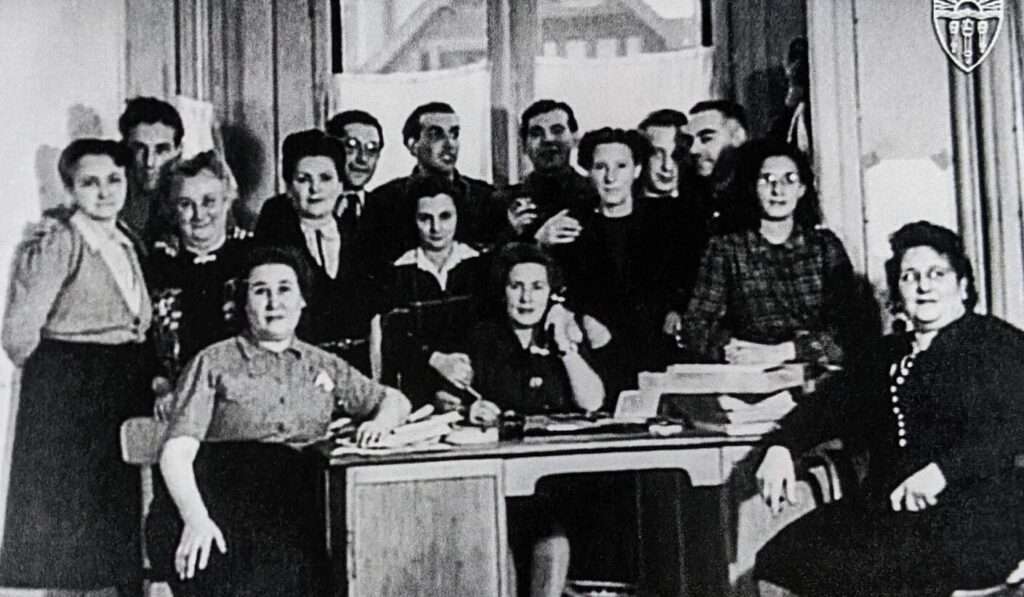
In Amsterdam arbeitete Hilde für die Jüdische Gemeinde. Ihre Kolleginnen gaben ihr eine Party, weil sie das Konzentrationslager überlebt hatte. Für Irma und ihre Kolleginnen gab es viel zu tun: „We supplied people who came back from the camps with clothing, with food, with work places, with living quarters. There came hundreds and hundreds back, Dutch and non-Dutch people. And they had to be taken care of until they could go on to other countries.“101
Über das Schicksal ihrer Eltern waren die Schwestern im Ungewissen. Weil sie keine Adressen hatten, wussten sie nicht, wie sie Kontakt zu ihren Verwandten in den Staaten aufnehmen sollten. Eines Tages bekamen sie einen Brief von ihrem Bruder Julius, dem zweitältesten der Simon-Geschwister, der 1938 in die USA emigriert war. Er hatte ihre Amsterdamer Adresse durch die Vermittlung des Roten Kreuzes bekommen.
Beim Roten Kreuz hatte er sich auch nach dem Verbleib der Eltern erkundigt – und was die Schwestern geahnt hatten, wurde schreckliche Gewissheit: „[Julius] got […] the date when our parents had been brought from Theresienstadt in October of ’44 … There went two trains, they said, to Switzerland. One train went to Switzerland. A cousin of our grandmother was on it. And she came back to Holland. She told us. The other train went to Auschwitz. So the Red Cross wrote us, said people were right away gassed there. So we took a date as the Yahrzeit102 [Yiddish for anniversary of death], which the Red Cross gave us. That’s all we know about them.“103 – Paul Arnsberg teilt mit, dass Isaak Simon noch vor seinem Abtransport nach Auschwitz das Kol Nidre – das Gebet vor dem Abendgebet des Versöhnungstages – gebetet haben soll.104
Auch andere Verwandte fielen dem Holocaust zum Opfer: „We had cousins, they lived in Westerburg in Westerwald, and they moved to Mainz. Mainz is a well-known German city. They were deported. No trace of them – no date, no trace.“105
Während ihres Aufenthalts in Amsterdam wurde Irma Rothschild gefragt, ob sie im Prozess gegen den Bergen-Belsener Lagerkommandanten Josef Kramer106 aussagen wolle. Doch sie lehnte ab: „I was not in a condition, at that time, to go back to Germany. So I gave them a written report. He was hanged – what he deserved.“107 – Den NS-Kriegsverbrecherprozess in Nürnberg sah sie im Fernsehen. Dorthin zu reisen, konnte sie sich nicht vorstellen: „It’s all too exciting.“108
Im Dezember 1946 verließen die Schwestern Amsterdam und fuhren zunächst nach England. In London verbrachten sie drei Wochen bei den Verwandten von Irmas verstorbenem Ehemann Erwin Rothschild, die ihnen die Einreisepapiere verschafft hatten. Von England aus schifften sie sich nach New York ein. Auf der ‚Queen Elisabeth‘, für die der Bruder Julius und ein Onkel die Tickets besorgt hatten, überquerten sie den Atlantik.
Die Schwestern fühlten sich auf der Überfahrt wie im Himmel (Irma Haas: „That was heaven for us.“109). Es gab koscheres Essen, zertifiziert vom Londonder Rabbinat – kein Vergleich zur Ernährungslage in Holland. Irma Haas: „We were told by the rabbinate when we arrived there [in Holland] in ’45, in June, that we had to eat the meat which we got on our ration cards till Rosh Hashana, because there was no kosher meat. But a few weeks later we got the first packages from here [the US], with [kosher] salamis and everything, and then we stopped [eating non-kosher food].“110
Als sie das reich gedeckte Buffet auf der ‚Queen Elisabeth‘ sahen, dachten die Schwestern an die, die sie hungernd zurückgelassen hatten. Irma Haas: „My sister-in-law [in Amsterdam] got – I think – two eggs a month for the baby. That was all. And as we saw the food on the ‚Queen Elisabeth‘ in the morning, at breakfast, Hilde said: ‚I wish I could give something to the children in Amsterdam.'“111
Am 1. Januar 1947 landete die ‚Queen Elisabeth‘ in New York. Die Schwestern verbrachten vier Wochen bei ihrem Bruder Julius in Philadelphia. Von dort aus zogen sie nach Washington Heights, einem Stadtteil im Stadtbezirk Manhattan in New York City mit zu dieser Zeit hohem deutsch-jüdischen Bevölkerungsanteil.
Am 1. Februar 1947 begann Irmas neuer Job als Kindergärtnerin und Vorschullehrerin, dem sie dreißig Jahre lang treu bleiben sollte. Der Kindergarten war eine jüdisch-orthodoxe Einrichtung, gegründet 1938 von deutsch-jüdischen Immigrantinnen. Irma Haas: „The [Jewish refugee] women had to work when they came here [and wanted] to place their children in an Orthodox kindergarten. […] And they founded four kindergartens in Washington Heights, each with about 25 to 28 children. In 1960 […] the oranization bought a [ground] in Washington Heights, and they built a kindergarten there. And we united the four kindergartens in one. We had a beautiful school. And I was a head teacher there. And later I became a director of the school.“112 Neben dem Betrieb des Kindergartens übernahm die Organisation jedes Jahr für etwa 250 Kinder die Kosten für die Sommercamps, die sich ihre Eltern sonst nicht hätten leisten können.
1949 heiratete Hilde den jüdischen Arzt Dr. Nathan Meyer. Auch Irma heiratete 1955 zum zweiten Mal: „My husband [Nathan Haas], my second husband, was a very close friend of my late brother-in-law [Hilde’s second husband Nathan Meyer]. And he lost his wife in 1954, she died of cancer within a few weeks. I had first to fly to Johannesburg, South Africa, for Halizah. If somebody dies and had no children [as with Erwin Rothschild], and a brother of the [late] husband is alive, he [the widow’s brother-in-law] has to give her [the widow] permission to remarry, even if he is married. And he was married and had children. And this is something that has to be done in person. A get,113 the divorce, can’t be handed over by a third person.“114
Die beiden Schwestern lebten mit ihren beiden Ehemännern in benachbarten Appartments in Washington Heights in der Nähe des Columbia-Presbyterian Medical Center, wo Hildes Ehemann Dr. Nathan Meyer als Arzt arbeitete. Als dieser 1967 in den Vorruhestand gehen wollte, äußerte er den Wunsch, wieder in einem eigenen Haus zu leben wie in Regensburg, von wo er von den Nationalsozialisten vertrieben worden war.115 So kauften sich die Haas‘ und Meyers zusammen ein Haus in Englewood, New Jersey und pendelten jeden Tag nach New York City zur Arbeit.
In ihrer neuen Heimat Englewood schlossen sie sich gleich am ersten Tag der orthodoxen jüdischen Gemeinde an. Gleichzeitig blieben sie Mitglieder der „K’hal Adath Jeshurun“ in Washington Heights, nach dem ersten Rabbiner Dr. Joseph Breuer auch „Breuer’s“ genannt.116
1972 musste der orthodoxe Kindergarten, den Irma Haas leitete, geschlossen werden: „It got too dangerous. We had rocks thrown on our playground and […] on our windows. […] It wasn’t possible anymore. It was a beautiful building with four classrooms, each classroom had its own toilet, and outside the toilet for the teachers. A big kitchen, we had two cooks. The children got a big meal every day.“117 – Danach arbeitete Irma Haas noch einige Jahre für den Sommercamp-Service, aber auch diesen Teil ihres Engagements musste die Organisation einstellen, weil das Personal älter wurde: „Most of the board is not alive anymore“, bedauert Irma Haas 1997 im Interview.
Von der Hausgemeinschaft der Haas‘ und Meyers schwärmt Irma Haas im Interview: „It worked out very well. There were some people who said: ‚That won’t work.‘ But it worked wonderful. My brother-in-law was a wonderful man. And he was not only a brother-in-law, he was a friend of ours. When my husband got sick – he had colitis –, he [Nathan Meyer] was wonderful for him.“118
Irmas Ehemann Nathan Haas starb im November 1978 in Israel an einer Darmerkrankung. Ihr Schwager Nathan Meyer erlitt 1997 einen Herzinfarkt, an dem er innerhalb von einer Stunde starb.
Hilde Meyer kehrte zweimal zurück nach Londorf, Ilse einmal: „We went to the cemetery, but it was in a terrible condition. They fixed it, and they sent us pictures, but we didn’t … We were too involved, we couldn’t do it anymore. […] We didn’t go back anymore.“119 – Eine ganz andere Erfahrung machten Hilde und Nathan Meyer, als sie 1952 nach Regensburg reisten, wo Nathan, wie er es sich während der NS-Verfolgung vorgenommen hatte, die Gräber seiner Eltern besuchte. Im Gegensatz zu Londorf war der Jüdische Friedhof in Regensburg, so Irma Haas, „in perfect condition“,120 und der Friedhofswärter versicherte Nathan Meyer, er kümmere sich um die Gräber seiner Eltern.
Irma Haas und Hilde Meyer engagierten sich zeitlebens für das Shaare Zedek-Krankenhaus in Jerusalem121 und unterstützten zionistische Organisationen wie Emunah122 und Amit.123 Im hohen Alter von 97 (Irma) und 94 (Hilde) reisten sie im Dezember 2004 nach Israel aus. In Beit Barth bei Jerusalem, einem Rehabilitationszentrum der Organisation Reuth,124 fanden sie ihr letztes Zuhause.
Beide Schwestern starben in Jerusalem: Hilde Meyer, geborene Simon, verwitwete Eisenmann, starb ein Jahr nach der Aliyah im Mai 2005 im Alter von 94 Jahren.125 Irma Haas, geborene Simon, verwitwete Rothschild, starb vier Jahre später, am 18. April 2009. Sie wurde 101 Jahre alt.126
Quellen:
- Hauptliste der Schüler und Schülerinnen der Höheren Bürgerschule (bis Ostern 1914) und Realschule (O. 1914–O. 1926) und Oberrealschule (O. 1926–O. 1938) und Oberschule für Jungen (ab O. 1938). Grünberg i. H. Angefangen Ostern 1910, beendet mit Schluss des Schuljahres 1938/39 (Archiv der Theo-Koch-Schule).
- Oberrealschule Grünberg in Hessen. Schülerlisten 1929–1932/33 (Archiv der Theo-Koch-Schule).
- Haas, Irma (born Simon). Interview 32295. Interview by Miriam Horowitz. Visual History Archive, USC Shoah Foundation, 04 August 1997. https://vha.usc.edu/testimony/32295. Last accessed 08 Sep 2026. – Transkription von Christina Müller. An manchen Stellen, vor allem in Tape 2, wurden Erzählsequenzen nach chronologischen Gesichtspunkten neu angeordnet.
- Paul Arnsberg: Die jüdischen Gemeinden in Hessen. Anfang, Untergang, Neubeginn. Erster Band, Frankfurt a. M. 1971.
- Studienkreis Deutscher Widerstand (Hg.): Heimatgeschichtlicher Wegweiser zu Stätten des Widerstandes und der Verfolgung 1933–1945. Band 1/2: Hessen II. Regierungsbezirke Gießen und Kassel, Frankfurt a. M. 1996.
- Hanno Müller: Juden in Gießen. 1788–1942. Hg. vom Magistrat der Universitätsstadt Gießen, Gießen 2012.
- Arthur Rothmann: Jüdisches Leben in der Rabenau. In: Gabriele Hofmann und Harald Jung (Hg.): 1250 Jahre Londorf. Die Zeit von 1958 bis 2008, Rabenau 2008 (=Schriftenreihe des Vereins für Heimat- und Kulturgeschichte der Rabenau e.V., Bd. 2).
- Christine Hühn: Familienbuch der Juden in Allendorf an der Lumda. Hg. von der Evangelischen Kirchengemeinde Alllendorf und der Arbeitsgemeinschaft Heimatgeschichte Allendorf a. d. Lumda e.V., o. O. u. o. J. [2019].
- Stefan Gotthelf Hoffmann: Der „Nordecker Judenmord“. Hintergründe zum Tode von Salomon und Johanna Wolf am 3. März 1884. Ein Beitrag zur Familiengeschichte des Schriftstellers Friedrich Wolf (1884–1953). 2 Bände. 1. Band, Gransee 2022.
- Hanno Müller: Juden in Rabenau. Geilshausen, Kesselbach, Londorf, Rüddingshausen. Jüdische Schüler in Grünberg, Lich 2023.
- Schlomo Samson: Zwischen Finsternis und Licht. 50 Jahre nach Bergen-Belsen. Erinnerungen eines Leipziger Juden, Jerusalem 1995.
- Joseph Berger: A Bond Tragedy and Time Couldn’t Break, New York Times vom 29. Dezember 2004; vgl. https://isurvived.org/InTheNews/2sisters.html (zuletzt aufgerufen am 9. September 2026).
- Internet-Quellen: S. Fußnoten.
- Interview Irma Haas, geb. Simon (1997), Tape 1. ↩︎
- Interview Irma Haas, geb. Simon (1997), Tape 1. ↩︎
- Rothmann, in: Hofmann u. Jung (2008), S. 90. ↩︎
- Interview Irma Haas, geb. Simon (1997), Tape 1. – Ein Chazan oder Kantor rezitiert singend die Gebete in der Synagoge und leitet die Gemeinde an. ↩︎
- Interview Irma Haas, geb. Simon (1997), Tape 1. ↩︎
- Interview Irma Haas, geb. Simon (1997), Tape 1. ↩︎
- Interview Irma Haas, geb. Simon (1997), Tape 1. ↩︎
- Rothmann, in: Hofmann u. Jung (2008), S. 90. – Damals trafen sich die unverheirateten Mädchen eines Jahrgangs an Winterabenden in einem der Elternhäuser, um gemeinsam für die Aussteuer zu spinnen. Dies diente der Geselligkeit und sparte Ressourcen; vgl. https://de.wikipedia.org/wiki/Spinnstube (zuletzt aufgerufen am 5. September 2026). ↩︎
- Interview Irma Haas, geb. Simon (1997), Tape 1. ↩︎
- Interview Irma Haas, geb. Simon (1997), Tape 1. ↩︎
- Interview Irma Haas, geb. Simon (1997), Tape 1. ↩︎
- Anzeige abgebildet und transkribiert bei https://alemannia-judaica.de/londorf_synagoge.htm (zuletzt aufgerufen am 5. September 2026). ↩︎
- Interview Irma Haas, geb. Simon (1997), Tape 1. ↩︎
- Genauer dazu: Hoffmann (1922). ↩︎
- Wahrscheinlich handelt es sich um Johanna Pfnorr, geb. am 2. Februar 1908 in Londorf; ihr Vater Heinrich Pfnorr war Rentmeister ebd. Auf dem Klassenfoto von Ostern 1923 ist Johanna Pfnorr ebenfalls zu sehen (1. Reihe, 2. v. r.). ↩︎
- Interview Irma Haas, geb. Simon (1997), Tape 1. ↩︎
- Hier scheint sich Irma Simon in der Zeit zu irren. Der Boykottaktion gegen jüdische Geschäfte und Fachleute fand am 1. April 1933 statt. ↩︎
- Interview Irma Haas, geb. Simon (1997), Tape 1. ↩︎
- Interview Irma Haas, geb. Simon (1997), Tape 1. ↩︎
- Interview Irma Haas, geb. Simon (1997), Tape 1. ↩︎
- Vgl. dazu den Wikipdia-Artikel: https://de.wikipedia.org/wiki/J%C3%BCdisches_Kinder-_und_Landschulheim_Caputh (zuletzt aufgerufen am 5. September 2026). ↩︎
- Interview Irma Haas, geb. Simon (1997), Tape 1. ↩︎
- 1868 gegründete jüdische Gemeide im Geist des aufgeklärten orthodoxen Judentums mit Sitz in der Artilleriestraße 31, heute Tucholskystraße 40. Vgl. https://de.wikipedia.org/wiki/Israelitische_Synagogen-Gemeinde_Adass_Jisroel_zu_Berlin (zuletzt aufgerufen am 5. September 2026). ↩︎
- Interview Irma Haas, geb. Simon (1997), Tape 1. ↩︎
- Interview Irma Haas, geb. Simon (1997), Tape 1. ↩︎
- Interview Irma Haas, geb. Simon (1997), Tape 1. ↩︎
- Vgl. dazu https://www.bpb.de/themen/zeit-kulturgeschichte/geteilte-geschichte/340136/neue-synagoge-berlin-an-der-oranienburger-strasse/ (zuletzt aufgerufen am 5. September 2026). ↩︎
- Interview Irma Haas, geb. Simon (1997), Tape 1. ↩︎
- Interview Irma Haas, geb. Simon (1997), Tape 1. ↩︎
- Interview Irma Haas, geb. Simon (1997), Tape 1. ↩︎
- Interview Irma Haas, geb. Simon (1997), Tape 1. ↩︎
- Rothmann, in: Hofmann u. Jung (2008), S. 90. ↩︎
- Rothmann, in: Hofmann u. Jung (2008), S. 90. ↩︎
- Im Interview nennt Irma Haas irrtümlich die Jahreszahl 1940. ↩︎
- Interview Irma Haas, geb. Simon (1997), Tape 1. ↩︎
- Zur Irrfahrt der St. Louis vgl. den Wikipedia-Artikel: https://de.wikipedia.org/wiki/Irrfahrt_der_St._Louis (zuletzt aufgerufen am 5. September 2026). ↩︎
- Interview Irma Haas, geb. Simon (1997), Tape 1. ↩︎
- Interview Irma Haas, geb. Simon (1997), Tape 1. ↩︎
- Interview Irma Haas, geb. Simon (1997), Tape 1. ↩︎
- Interview Irma Haas, geb. Simon (1997), Tape 1. ↩︎
- Interview Irma Haas, geb. Simon (1997), Tape 1. ↩︎
- Interview Irma Haas, geb. Simon (1997), Tape 1. ↩︎
- Interview Irma Haas, geb. Simon (1997), Tape 1. ↩︎
- Interview Irma Haas, geb. Simon (1997), Tape 2. ↩︎
- Interview Irma Haas, geb. Simon (1997), Tape 2. – Zur Razzia vom 22. und 23. Februar 1941 vgl. https://www.annefrank.org/de/timeline/26/groe-razzia-in-amsterdam-erste-deportation-judischer-niederlander/ (zuletzt aufgerufen am 6. September 2026). ↩︎
- Vgl. https://en.wikipedia.org/wiki/Hollandsche_Schouwburg (zuletzt aufgerufen am 6. September 2026). ↩︎
- Interview Irma Haas, geb. Simon (1997), Tape 2. ↩︎
- Interview Irma Haas, geb. Simon (1997), Tape 2. ↩︎
- Interview Irma Haas, geb. Simon (1997), Tape 2. ↩︎
- Interview Irma Haas, geb. Simon (1997), Tape 2. ↩︎
- Interview Irma Haas, geb. Simon (1997), Tape 2. ↩︎
- Interview Irma Haas, geb. Simon (1997), Tape 2. ↩︎
- Zu Gemmeker vgl. https://de.wikipedia.org/wiki/Albert_Konrad_Gemmeker (zuletzt aufgerufen am 6. September 2026). ↩︎
- Überlebende Insassen sagten von Konrad Gemmeker: „Der vorige Kommandant trat die Leute mit dem Stiefel nach Polen, dieser lächelt sie nach Polen.“ Zitiert in https://de.wikipedia.org/wiki/Albert_Konrad_Gemmeker (zuletzt aufgerufen am 6. September 2026). ↩︎
- Interview Irma Haas, geb. Simon (1997), Tape 2. ↩︎
- Interview Irma Haas, geb. Simon (1997), Tape 2. ↩︎
- Interview Irma Haas, geb. Simon (1997), Tape 2. ↩︎
- Interview Irma Haas, geb. Simon (1997), Tape 2. ↩︎
- Interview Irma Haas, geb. Simon (1997), Tape 2. ↩︎
- Interview Irma Haas, geb. Simon (1997), Tape 2. ↩︎
- Interview Irma Haas, geb. Simon (1997), Tape 2. ↩︎
- Interview Irma Haas, geb. Simon (1997), Tape 2. – Zum „Schuh-Kommando“ im sogenannten „Stern-Lager“, dem Lager der jüdischen Häftling, vgl. den Wikipedia-Artikel: https://de.wikipedia.org/wiki/KZ_Bergen-Belsen (zuletzt aufgerufen am 6. September 2026. ↩︎
- Interview Irma Haas, geb. Simon (1997), Tape 2. ↩︎
- Interview Irma Haas, geb. Simon (1997), Tape 2. ↩︎
- Interview Irma Haas, geb. Simon (1997), Tape 2. ↩︎
- Interview Irma Haas, geb. Simon (1997), Tape 2. ↩︎
- Interview Irma Haas, geb. Simon (1997), Tape 2. ↩︎
- Interview Irma Haas, geb. Simon (1997), Tape 3. ↩︎
- Interview Irma Haas, geb. Simon (1997), Tape 2. ↩︎
- Interview Irma Haas, geb. Simon (1997), Tape 2. ↩︎
- Interview Irma Haas, geb. Simon (1997), Tape 2. ↩︎
- Interview Irma Haas, geb. Simon (1997), Tape 2. ↩︎
- Interview Irma Haas, geb. Simon (1997), Tape 3. ↩︎
- Interview Irma Haas, geb. Simon (1997), Tape 3. ↩︎
- Interview Irma Haas, geb. Simon (1997), Tape 3. ↩︎
- Interview Irma Haas, geb. Simon (1997), Tape 2. ↩︎
- Interview Irma Haas, geb. Simon (1997), Tape 2. ↩︎
- Interview Irma Haas, geb. Simon (1997), Tape 2. ↩︎
- Interview Irma Haas, geb. Simon (1997), Tape 3. ↩︎
- Zum sogenannten „Verlorenen Zug“, dem letzten Evakuierungs-Transport aus Bergen-Belsen, vgl. den Wikipedia-Artikel: https://de.wikipedia.org/wiki/Verlorener_Zug (zuletzt aufgerufen am 6. September 2026). ↩︎
- Schlomo Samson: Zwischen Finsternis und Licht. 50 Jahre nach Bergen Belsen. Erinnerungen eines Leipziger Juden, Jerusalem 1995. ↩︎
- Interview Irma Haas, geb. Simon (1997), Tape 3. ↩︎
- Interview Irma Haas, geb. Simon (1997), Tape 3. ↩︎
- https://de.wikipedia.org/wiki/Verlorener_Zug (zuletzt aufgerufen am 6. September 2026). ↩︎
- Interview Irma Haas, geb. Simon (1997), Tape 3. ↩︎
- Interview Irma Haas, geb. Simon (1997), Tape 3. – Zur Kontroverse um Franklin D. Roosevelts Verhältnis zu den Juden vgl. den Wikipedia-Artikel, der die Reaktionen auf Richard Breitmans und Alan Lichtmans Buch ‚FDR and the Jews‘, Harvard University Press 2013, zusammenfasst: https://en.wikipedia.org/wiki/FDR_and_the_Jews (zuletzt aufgerufen am 7. September 2026). ↩︎
- Interview Irma Haas, geb. Simon (1997), Tape 3. ↩︎
- Interview Irma Haas, geb. Simon (1997), Tape 3. ↩︎
- Interview Irma Haas, geb. Simon (1997), Tape 3. ↩︎
- Interview Irma Haas, geb. Simon (1997), Tape 3. ↩︎
- Interview Irma Haas, geb. Simon (1997), Tape 3. ↩︎
- Interview Irma Haas, geb. Simon (1997), Tape 3. ↩︎
- Interview Irma Haas, geb. Simon (1997), Tape 3. ↩︎
- Vgl. https://www.gemeinde-troebitz.de/verzeichnis/objekt.php?mandat=64796 (zuletzt aufgerufen am 7. September 2026). ↩︎
- Interview Irma Haas, geb. Simon (1997), Tape 3. ↩︎
- Interview Irma Haas, geb. Simon (1997), Tape 3. ↩︎
- Interview Irma Haas, geb. Simon (1997), Tape 3. ↩︎
- Interview Irma Haas, geb. Simon (1997), Tape 3. ↩︎
- Interview Irma Haas, geb. Simon (1997), Tape 3. ↩︎
- Interview Irma Haas, geb. Simon (1997), Tape 3. ↩︎
- Interview Irma Haas, geb. Simon (1997), Tape 3. ↩︎
- Vgl. https://en.wikipedia.org/wiki/Yahrzeit (zuletzt aufgerufen am 7. September 2026). ↩︎
- Interview Irma Haas, geb. Simon (1997), Tape 3. ↩︎
- Vgl. Arnsberg (1971), S. 500. ↩︎
- Interview Irma Haas, geb. Simon (1997), Tape 3. ↩︎
- Vgl. https://de.wikipedia.org/wiki/Josef_Kramer (zuletzt aufgerufen am 8. September 2026). ↩︎
- Interview Irma Haas, geb. Simon (1997), Tape 4. ↩︎
- Interview Irma Haas, geb. Simon (1997), Tape 4. ↩︎
- Interview Irma Haas, geb. Simon (1997), Tape 3. ↩︎
- Interview Irma Haas, geb. Simon (1997), Tape 3. ↩︎
- Interview Irma Haas, geb. Simon (1997), Tape 3. ↩︎
- Interview Irma Haas, geb. Simon (1997), Tape 4. ↩︎
- Von Hebräisch גט (Get): Scheidebrief. Vgl. dazu https://de.wikipedia.org/wiki/Scheidebrief (zuletzt aufgerufen am 8. September 2026). ↩︎
- Interview Irma Haas, geb. Simon (1997), Tape 4. – Zum rabbinischen Brauch der Halizah vgl. https://en.wikipedia.org/wiki/Halizah (zuletzt aufgerufen am 8. September 2026). ↩︎
- Nathan Meyers Vater Dr. Seligmann Meyer war ein berühmter Rabbiner in Regensburg gewesen; vgl. https://www.alemannia-judaica.de/regensburg_texte.htm (zuletzt aufgerufen am 8. September 2026). ↩︎
- Vgl. die Website https://www.kajinc.org/ (zuletzt aufgerufen am 8. September 2026). ↩︎
- Interview Irma Haas, geb. Simon (1997), Tape 4. ↩︎
- Interivew Irma Haas, geb. Simon (1997), Tape 4. ↩︎
- Interview Irma Haas, geb. Simon (1997), Tape 4. ↩︎
- Interview Irma Haas, geb. Simon (19997), Tape 4. ↩︎
- https://www.szmc.org.il/en/ (zuletzt aufgerufen am 8. September 2026). ↩︎
- https://en.wikipedia.org/wiki/Emunah (zuletzt aufgerufen am 8. September 2026). ↩︎
- https://jwa.org/encyclopedia/article/amit (zuletzt aufgerufen am 8. September 2026). ↩︎
- https://www.reuth.org.il/?lang=en (zuletzt aufgerufen am 8. September 2026). ↩︎
- https://www.geni.com/people/Brunhilde-Eisenmann/6000000003229530589 (zuletzt aufgerufen am 9. September 2026). ↩︎
- https://www.geni.com/people/Irma-Haas/4024000756870057354 (zuletzt aufgerufen am 9. September 2026.) ↩︎